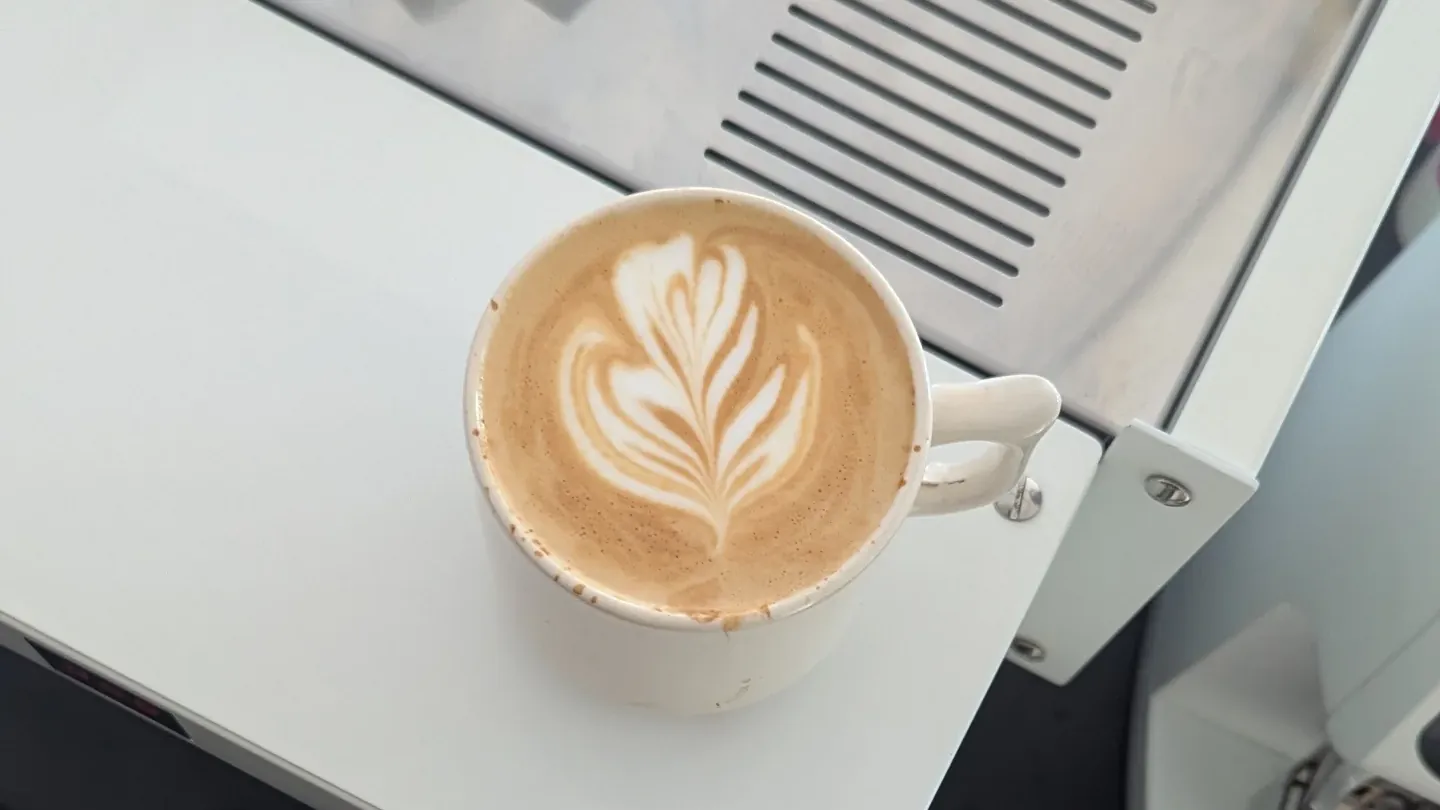
How to open a coffee shop in Lahore: a step-by-step guide
Location, licences, budget, equipment, team and launch: the full path to opening a coffee shop in Lahore, from a consultant who does it on the ground.
Read the guide By Ahmed Hussain
A useful coffee shop business plan in Pakistan answers one hard question before you spend the money: can this café pay its rent, salaries and electricity bill out of the cups it will realistically sell? Everything else in the document, from the mood board to the logo, matters far less than that answer.
This article works through the numbers in the order an investor or partner will ask about them: start-up costs, cost per cup, monthly fixed costs, break-even and payback, then how to stress-test the plan against the dollar rate, milk prices and a slow first quarter. Every figure here is an illustrative planning range for 2026. Your area, landlord and suppliers will change them, so replace each one with a current quote.
Owners usually write a business plan because a partner, investor or bank asks for one. The more important reader is you. A plan built honestly will tell you whether to sign the lease on the Gulberg unit or walk away, whether a kitchen is worth the extra investment, and how many months of losses you can survive.
The plans that cause trouble tend to share the same mistakes:
If your numbers only work when everything goes right, they do not work.
The table below shows how start-up spending typically splits for a small to mid-size café of around 1,000 to 1,500 square feet with seating and a light kitchen. The ranges are deliberately wide because finishes, equipment tier and landlord terms vary so much.
| Item | Indicative range in 2026 (PKR) | Notes |
|---|---|---|
| Rent advance and security deposit | Several months of rent | Negotiable, varies by landlord and area |
| Fit-out: civil, electrical, plumbing, furniture, signage | Roughly 5 million to 15 million | Biggest variable after rent |
| Espresso machine, grinders, brewing equipment | Roughly 2.5 million to 8 million | Imported, moves with the dollar rate |
| Kitchen equipment and refrigeration | Roughly 1.5 million to 6 million | Much lower for a coffee-and-pastry concept |
| Stabilisers, backup power, water filtration | Roughly 1 million to 4 million | Depends on generator or solar choice |
| POS, CCTV, sound, networking | Roughly 0.3 million to 1 million | Check PRA POS integration requirements |
| Opening stock, crockery, smallwares, uniforms | Roughly 0.5 million to 1.5 million | |
| Licences, design fees, consultancy, pre-opening marketing | Roughly 0.5 million to 2 million | |
| Working capital reserve | Three to six months of fixed costs | Not optional |
Add your actual rent advance and reserve to the subtotal, and you will usually land somewhere between the low teens and the forties in millions of rupees for this size of café. A kiosk can be a fraction of that. Get at least two quotes for every line above PKR 500,000. Our guide to choosing an espresso machine and grinder explains why the equipment line is so sensitive to the dollar rate.
Many plans in Pakistan use a single "food cost 30%" assumption for everything. That hides the details that decide your margin. Cost your main drinks individually. Here is an illustrative takeaway latte using a locally roasted specialty bean:
| Component | Quantity | Indicative cost (PKR) |
|---|---|---|
| Espresso | 18 g of beans at roughly PKR 9,000 per kg | About 160 |
| Milk | About 200 ml at roughly PKR 280 per litre | About 55 |
| Cup, lid and sleeve | One set | About 40 to 70 |
| Wastage allowance | Around 5 percent | About 15 |
| Total | About 270 to 300 |
If that latte sells for PKR 850 before tax, the direct cost is roughly a third of the price. For dine-in you lose the cup and lid but add washing, breakage and a little more milk. Iced drinks need ice, a bigger cup and a straw. Your figures will differ, which is the point: plug in your actual supplier prices and recipe weights.
Two further costs sit between the menu price and your margin. Card payment fees take a small percentage of every card sale. Delivery platforms charge a commission that can remove a large part of the margin on a drink, so check the current terms with each platform and consider a separate delivery price list. Menu pricing in more depth is covered in the article on café menu pricing in Pakistan.
Fixed costs are what you pay whether you sell ten cups or a thousand. This is one hypothetical example for a mid-size café; yours could be half or double.
| Monthly cost | Illustrative figure (PKR) |
|---|---|
| Rent | 500,000 |
| Salaries for around 8 to 10 staff | 650,000 |
| Electricity, gas, water and generator fuel | 300,000 |
| Internet, POS and software subscriptions | 25,000 |
| Maintenance, filters and servicing | 40,000 |
| Marketing | 100,000 |
| Cleaning, accountant and miscellaneous | 85,000 |
| Total | 1,700,000 |
Electricity deserves its own line in your plan. AC running through a Lahore or Multan summer, plus an espresso machine heated all day, can produce bills well above what owners expect, and generator fuel during outages adds more. Ask a nearby business of similar size what they pay in June, not in February.
Loan repayments and partner profit shares are not operating costs, but they are cash leaving the business. Show them separately so everyone sees the true monthly requirement.
Break-even is the point where contribution from sales covers fixed costs. The simplest version for a café:
Break-even items per month = monthly fixed costs ÷ average contribution per item
Contribution is the price before sales tax, minus direct ingredient and packaging costs, minus card fees. Using the illustrative figures above, suppose your average item sells for about PKR 800 before tax and costs about PKR 300 in direct costs and fees. Each item contributes roughly PKR 500.
PKR 1,700,000 ÷ 500 = 3,400 items per month, or around 113 items a day over 30 days.
Now ask whether that is realistic for your site. Count footfall at competing cafés nearby at the times you plan to trade. A café selling 113 items a day is not breaking any records, but one that is still selling 50 a day in month four is in serious trouble.
Break-even is not the same as recovering your investment. If the café sells around 150 items a day, it brings in roughly 4,500 items a month, contributing about PKR 2.25 million against PKR 1.7 million of fixed costs. That leaves around PKR 550,000 a month before tax and debt. On a PKR 25 million investment, payback would take more than three and a half years. That is the honest scale of the business, and it is why rent and fit-out discipline matter so much.
A plan is only as good as its worst reasonable case. Build these scenarios into your spreadsheet:
| Scenario | What moves | Sensible response |
|---|---|---|
| Rupee weakens against the dollar | Imported beans, equipment parts, syrups | Lock prices with suppliers for a period, review menu prices quarterly |
| Milk price increase | Cost of every milk drink | Recost recipes, adjust milk-heavy drinks first |
| Annual rent escalation | Fixed costs | Negotiate the escalation rate before signing |
| Slow first three months | Cash reserve | Keep reserve of three to six months of fixed costs |
| Summer electricity peak | Utility bills | Insulation, efficient AC, solar where practical |
| Key barista leaves | Quality and speed | Written recipes, cross-training, a retention plan |
Your plan should show prices and margins on the right side of sales tax. In Punjab, restaurant services fall under the Punjab Revenue Authority (PRA), and the rate, any concession for card payments and POS integration requirements have changed over time. You will also need FBR registration and an accountant who understands both. Confirm the current rules with the PRA or a tax adviser rather than relying on what another café owner told you last year.
Budget for the accountant's fee, any POS integration cost, and the time it takes to file. These are small lines compared to rent, but a missed registration can cause far bigger problems than its cost.
Keep the written narrative short. Partners and banks read the tables; you should too. Once the plan holds up, the step-by-step guide to opening a coffee shop in Lahore shows how the project moves from paper to opening day.
Ahmed Hussain is a Lahore-based coffee consultant with years of hands-on café work in Saudi Arabia and Pakistan, and he launched Retrograde Coffee in Lahore, so his plans are built around how a bar actually runs, not just how a spreadsheet looks. If you would like your numbers checked or a full feasibility study prepared, see the café feasibility and business plan service or book a consultation.
Written by
Coffee consultant in Lahore. Years behind café bars in Saudi Arabia and Pakistan; launched Retrograde Coffee in Lahore; beverage expert at Monin Pakistan events.
Want Ahmed to look at your plan? A short message is enough to start.
FAQ
Still unsure? Ask Ahmed on WhatsApp.
As an indicative range in 2026, a small to mid-size café with seating often needs somewhere between the low teens and the forties in millions of rupees, including rent advance and working capital. A kiosk or takeaway counter can need far less. Area, fit-out quality and equipment tier make the biggest difference, so build your plan from current quotes.
It can be, but margins depend on rent, volume and cost control rather than the coffee price alone. Coffee drinks carry a healthy gross margin, yet rent, salaries and electricity are heavy fixed costs. A plan that shows break-even within a realistic number of daily sales is the best test.
Divide your monthly fixed costs by the average contribution per item sold, where contribution is the price before tax minus ingredients, packaging and card fees. Then divide by the number of trading days to get a daily target. Compare that target with the footfall you have actually observed near your site.
Include the concept, location analysis, costed menu, start-up cost table, staffing plan, monthly fixed costs, a sales forecast that ramps up, break-even and payback, cash flow for at least a year, stress-test scenarios and the funding structure. Keep the narrative short and let the tables do the work.
Restaurant and café services in Punjab generally fall under the Punjab Revenue Authority, alongside FBR registration for the business. Rates, card payment concessions and POS integration requirements have changed over time. Confirm the current position with the PRA or a qualified tax adviser before you finalise prices.
Keep exploring

01
From concept and location to opening day: a complete plan for a café that works from the first cup.
Learn more
03
Signature drinks and a menu priced for margin, with recipes your team can repeat on a busy evening.
Learn more
08
Investment, running costs, cost per cup and break-even, written so you can decide before you sign a lease.
Learn more
Location, licences, budget, equipment, team and launch: the full path to opening a coffee shop in Lahore, from a consultant who does it on the ground.
Read the guide
Work out cost per cup in rupees, set prices that protect your margin and design a café menu that sells the drinks you want to sell.
Read the guideCoffee consultant by city
Ready when you are
Tell Ahmed where your plan stands today. You get a clear next step within one working day.